AI Trading
By the Time the AI Answers, the Setup Is Gone.
Latency as the hidden cost of every human-in-the-loop AI workflow.
Igniz
Latency as the hidden cost of every human-in-the-loop AI workflow.
The missing link between insight and execution, and why that gap is where all the money leaks out.
There's a specific kind of trader who spends four hours a day prompting an LLM for market analysis, copying the output into a spreadsheet, then manually placing orders based on what an AI told them to do ten minutes ago.

You screenshot your chart. You paste it into an AI. You read the analysis. You click buy.
Let's get something uncomfortable out of the way first.
Most LPs focus on one question: which pool should I deposit into?
Most LPs pick a fee tier by vibes, then wonder why a busy-looking position earns almost nothing.
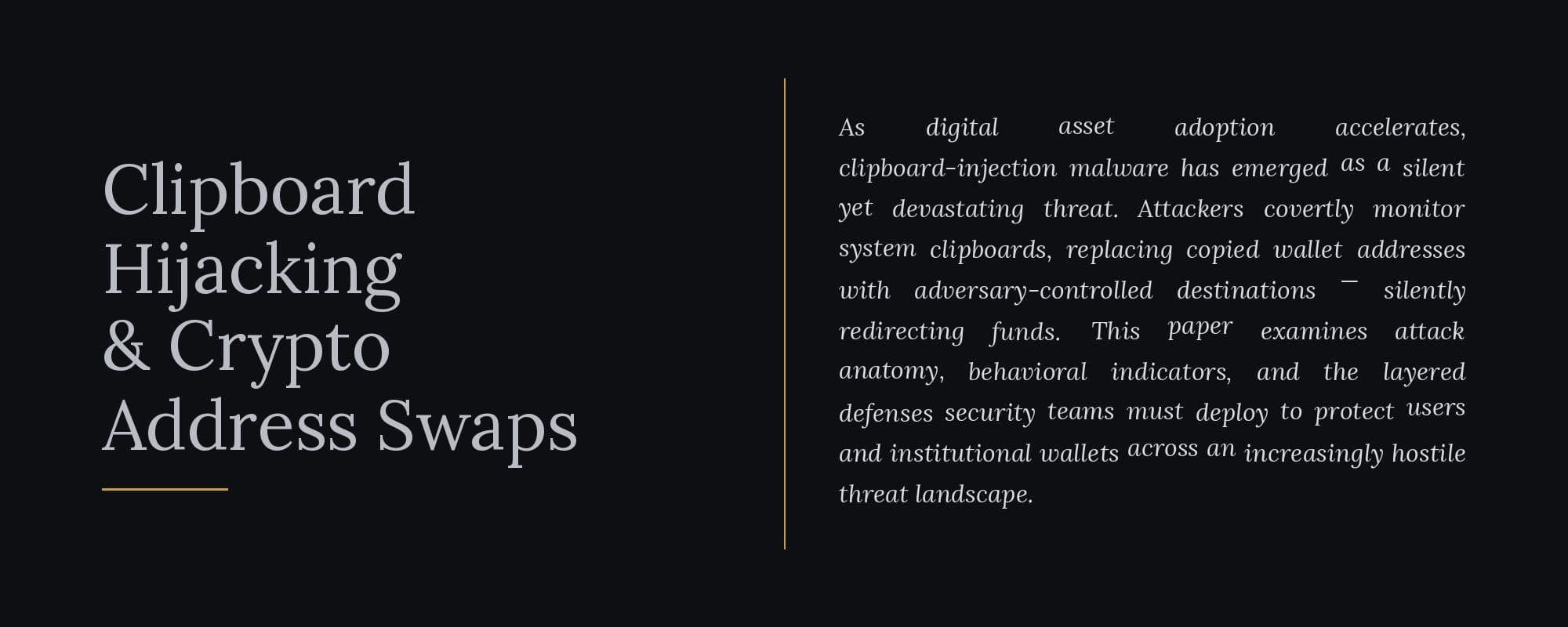
You copied your wallet address. You pasted it. You hit send.

You connected your wallet to what looked like a legitimate DeFi protocol. A small window appeared. It asked for approval. You clicked confirm.
There is a scam so elegant in its simplicity that it has drained billions from crypto wallets since DeFi went mainstream. It does not require a sophisticated hack. It does not need a social engineering campaign. All it needs is your rush, your excitement about a hot new token, and one wrong address.

There is a type of crypto scam that does not rely on fake links, rushed DMs, or promises of 10x returns. It relies on something far more exploitable: human habit.

You find a new token. The chart looks like a ski slope going up. Early holders are printing money on-chain, you can see it yourself. You buy in. The price keeps climbing. You decide to sell.
You clicked "Approve" on a token contract once.
Most people hear about a DeFi hack and picture someone in a hoodie running a brute-force attack against a server.

Nobody talks about the moment crypto actually breaks for people.

Most people get rekt not because they are stupid. They get rekt because nobody sat them down and explained the mechanics. Connecting your wallet to a decentralized application takes about four clicks. Understanding what those four clicks actually do takes a bit longer.…
There's a phrase that gets thrown around a lot in crypto circles: not your keys, not your coins.
Most traders stare at price charts and wonder why they keep getting wrecked.
Most traders watch price. Smart traders watch liquidity. There is a reason that distinction matters so much, and it comes down to what price actually is: a lagging signal that shows you where liquidity already moved.…
Everyone in crypto talks about "on-chain data." Very few people actually know how to read it.
Most people who try to follow whale wallets end up getting wrecked. They see a big wallet buy something, ape in, and watch the price dump on their heads. The whale made money. You did not.
Most people in crypto look at market cap the same way someone looks at a restaurant's Yelp rating before deciding to eat there. It gives you a feeling. It tells you something. But it is not the full picture, and betting real money on a feeling is how portfolios quietly bleed out.

There is a number on every token's page that gets treated as a measure of health, interest, and legitimacy. That number is trading volume. And in crypto, it is probably the most manipulated data point in existence.
Everyone says burns are bullish. The reasoning sounds airtight: fewer tokens in circulation means each remaining token is worth more. Supply goes down, price goes up. Simple economics.
Every token has a price chart. Almost nobody looks at the other chart that actually explains it.
There is a number plastered across every crypto data site. It sits next to the price, gets quoted in Discord servers, and drives more FOMO trades than almost anything else in this market.
Most traders treat volume like background noise. They glance at the bars under a chart, nod, and move on. That habit costs money.
A whitepaper is a sales document wearing a lab coat.
Every article you have ever read on this topic frames it the same way. Scalping is fast, swing trading is slow. Scalping is many small wins, swing trading is fewer big ones. Scalping needs screen time, swing trading needs patience. All true. All useless.…
Most traders carry a mental model of stop-losses that was built for a world that doesn't exist on-chain. They picture a guardian sitting quietly above the order book, watching price, ready to yank them out the instant things go south.…
There's a specific kind of pain that only thin-liquidity trading can deliver.
You want to trade Token A for Token C. Simple enough. Except there's no pool that holds both of them.

You submit a swap. You pay the gas. The transaction confirms.
Most traders think of arbitrage as a predatory game. Fast bots. Stolen value. Sophisticated actors extracting money from regular people.
You hit swap. The preview said one number. The result was worse. You shrugged and blamed volatility.
Most traders stare at an order book like it's a stock ticker. Green numbers good, red numbers bad, big walls scary. Then they wonder why they keep getting wicked out of positions and front-run on entries.
Most people lose money in the first thirty seconds of a trade, before price even moves against them. They lose it to the spread, to the slippage, to the quiet gap between what they thought they were buying and what the market actually handed them. The culprit is almost never the chart.…
Every wallet guide on the internet ends the same way. Hardware good, software risky, buy the metal box, the end. It is advice shaped like a conclusion, and it skips the only part that matters: what you are actually trading away when you choose one over the other. Because security is never free.…
Every token launch tells a story. The whitepaper tells one version, the marketing tells another, and the tokenomics tell the truth.…
Picture a traveler standing at a border with a suitcase full of currency nobody on the other side will accept. They could find a money changer, pay a fee, wait in line, and hope the rate is fair. Or they could stay home. For years, this was the daily reality of moving value between blockchains.…
You hit confirm. The price you saw was good. The price you got was worse.
You bought the token. The project said it was "community governed." You felt good about that.
For most of crypto's short history, decentralized trading had a dirty secret.
Picture two roads that lead to the same city.
There is a comforting story people tell themselves about getting scammed. It goes: the victims were careless, or greedy, or technically clueless, and I am none of those things, so this will not happen to me. That story is the single most dangerous thing in your wallet.…
Most people pick one of these before they understand what they actually signed up for. They see two numbers, an APY on a staking page and a bigger APY on a liquidity pool, pick the bigger one, and assume math is on their side.…